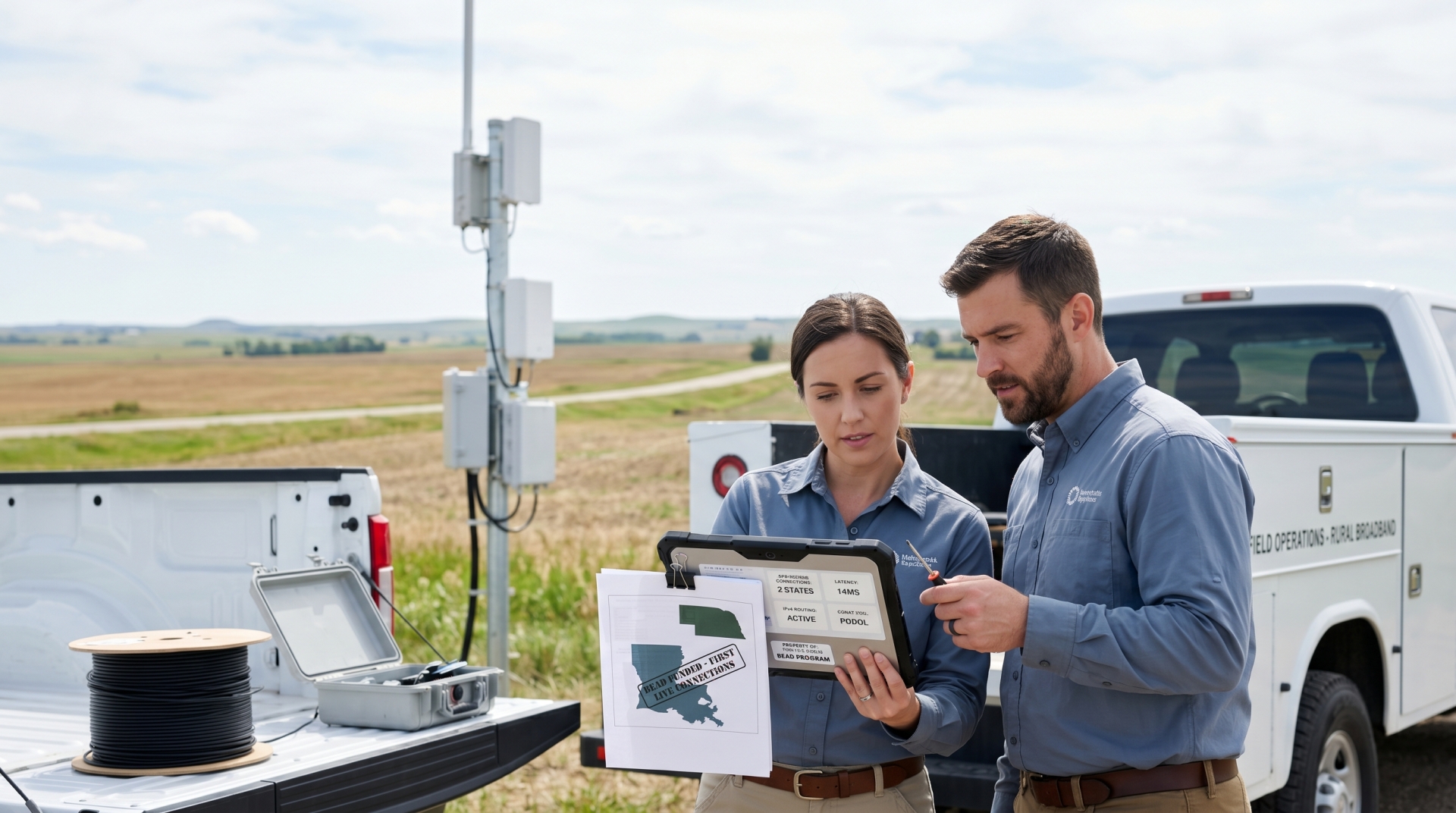
The first BEAD-funded connections are live, which is the point where broadband policy stops being a spreadsheet exercise and starts acting like an actual network. The early activations came through fixed wireless towers, not a fiber-only parade, and that tells you what operators value when speed to service beats the romance of trenching.
BEAD Subsidies Finally Reach Customers
Louisiana and Nebraska are now the proof points every other BEAD state will get measured against. Once a subsidy-funded project moves from approval to a paying subscriber, the story changes from grant paperwork to uptime, install velocity, and whether the network can keep its promises after the applause fades. That is also when clean IPv4 management stops being an internal housekeeping issue and becomes part of whether the first customers get online without friction.
The market loves a ribbon-cutting. Operators care about whether the site can hold together after the first truck roll, the first trouble ticket, and the first round of expectations from local officials who now have a live example to point at.
Fixed Wireless Won The First Mile
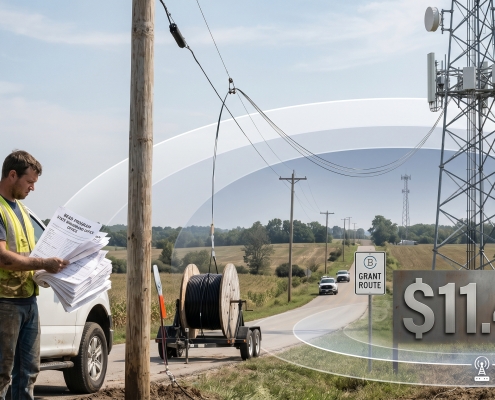
Both early activations used tower-based delivery, which is the practical wrinkle hiding behind the headline. Towers can move from award to turn-up faster than trench-heavy fiber when spectrum, access, and backhaul are already lined up. In sparse rural markets, that matters because a single site can cover a surprising amount of ground without waiting on every permit, splice, and weather delay to behave.
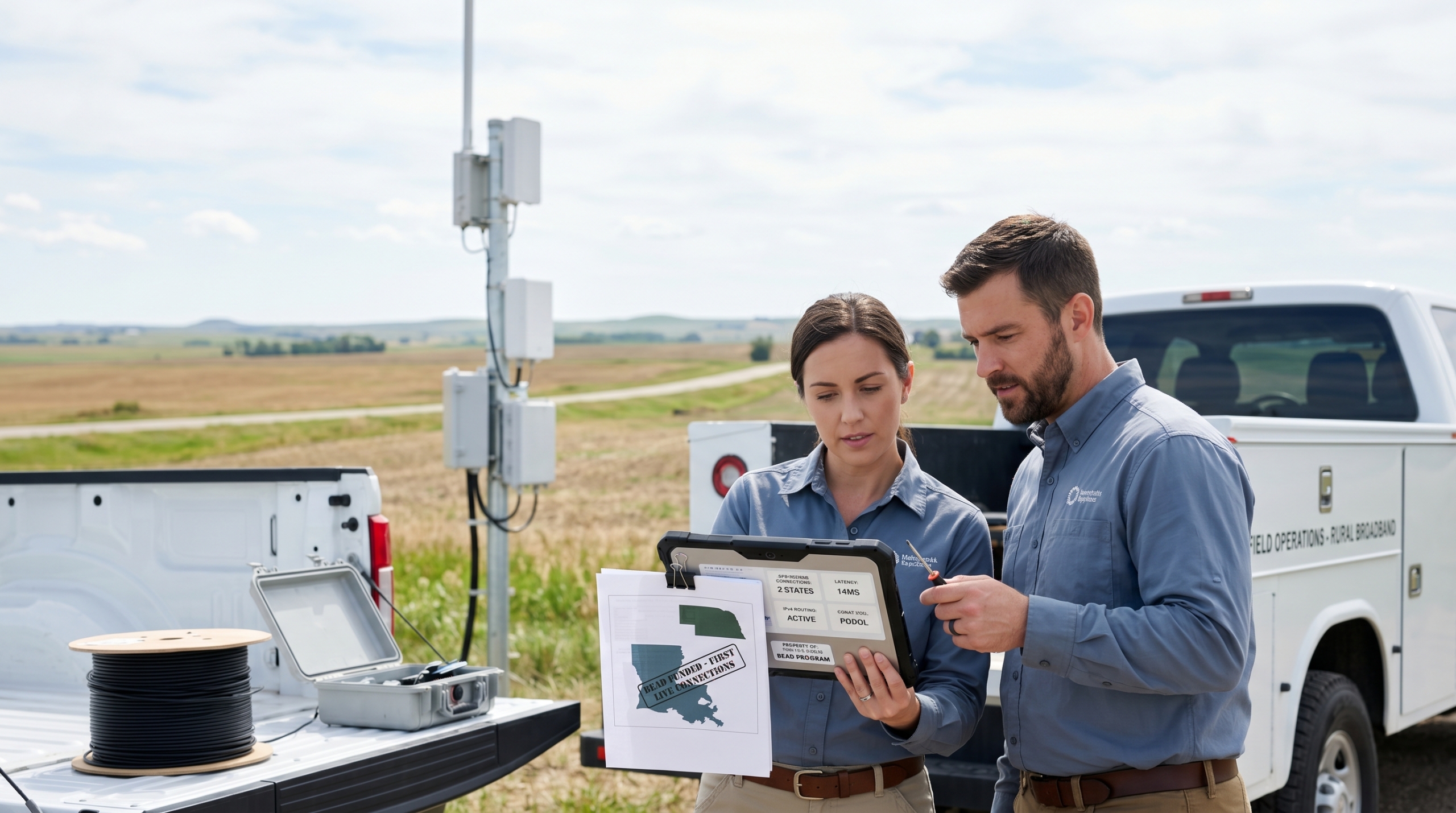
The tradeoff is that fixed wireless still needs the boring stuff done well. CGNAT planning, backhaul capacity, customer equipment, and field coordination all decide whether the first live launch looks like a network or just a faster way to generate support calls.
BEAD Now Exposes Network Discipline
This is where the story gets useful for operators. New rural builds still have to decide whether to buy more public IPv4, rely on carrier-grade NAT, or push harder into IPv6 from the start. Those choices shape inbound access, remote management, and how painful customer support becomes once the first wave of subscribers is live.
Routing policy suddenly matters in a way that slide decks never capture. If the addressing plan is sloppy and the edge is messy, BGP security and routing hygiene stop being back-office chores and start becoming a direct operating risk. BEAD is funding broadband access, but it is also testing whether operators can turn up service without turning the network into a cleanup project 6 months later.
What The Early Numbers Say
BEAD is a $42.45 billion program, so the first live activations are not the finish line. In Louisiana, Nextlink’s subgrant is reported at $18.5 million for 7,460 unserved or underserved locations, and one tower reportedly brought service to 104 BEAD locations in northwest Louisiana. In Nebraska, media materials put Vistabeam’s award at about $423,375 for 93 locations, and the Ogallala household connection was reported at 800 Mbps down and 200 Mbps up against the program’s 100 Mbps down and 20 Mbps up baseline.
The signal is simple. BEAD is now producing live service and measurable throughput, which means the next competitive advantage is not just getting funding awarded. It is turning that funding into installs, clean provisioning, and a network that behaves like an operator built it on purpose.
FAQ
Why Do These First BEAD Connections Matter?
They show BEAD has moved from approvals and planning into customer-facing service, which gives states and operators a real deployment benchmark.
Why Did Fixed Wireless Lead The Rollout?
Fixed wireless can be turned up faster than trench-heavy fiber when spectrum, towers, and backhaul are already in place.
What Does BEAD Mean For IPv4?
It means rural operators still have to manage scarce public IPv4, decide where CGNAT fits, and plan for IPv6 instead of treating it as an afterthought.
Does Live BEAD Service Guarantee Easy Operations?
No. The first connection only proves the network can turn up. Long-term success depends on address planning, routing discipline, installs, and support that do not unravel under load.